
What matters to me.
Learn about my priorities as your City Councilor.
Healthy Business
✳︎
Quality of Life
✳︎
Problem Solving
✳︎
City Identity
✳︎
Our Town Center
✳︎
Spending Wisely
✳︎
Healthy Business ✳︎ Quality of Life ✳︎ Problem Solving ✳︎ City Identity ✳︎ Our Town Center ✳︎ Spending Wisely ✳︎

Healthy Businesses = Healthy Communities.
I believe that Wilsonville succeeds when entrepreneurs feel confident opening a business, employers choose to invest here, and local companies can grow without unnecessary obstacles.
A thriving local economy isn’t something that happens by accident. City government should actively remove barriers, streamline processes, invest in infrastructure, and become a trusted partner to businesses rather than become another obstacle.
Click here to learn more about My Plan for Economic Vitality

I’m a big fan of fiscal responsibility.
I know that every dollar City Hall spends came from someone who worked hard to earn it. I hold deep respect for the money earned by our community that goes to fund the city’s budget. As a small business owner, I expect every dollar I spend to provide a measurable result. I believe our tax dollars should be held to the same standard.
Our city funds deserve the same care and discipline citizens use when managing their own household budgets. Plain and simple.
The important distinction is that a city can't literally run its budget like a household or business. Some expenses are legally required, some are contractual, and some services have long-term infrastructure implications.
I would approach a structural city deficit like this:
1. Stop treating the General Fund as the debit card
If recurring expenses exceed recurring revenues, using reserves to cover the difference is not a solution. Reserves are there for emergencies, economic downturns and one-time needs, not to permanently subsidize an operating deficit. What would we stop doing if we couldn't reach into the General Fund to pay for it?
2. Put every expense on the table
I'd want staff to categorize expenditures into something like:
Essential: Core services we legally or practically must provide.
High-value: Services that directly and measurably contribute to safety, quality of life or economic vitality.
Nice-to-have: Valuable programs, but not essential.
Could be done differently: Services that might be delivered more efficiently through technology, partnerships, outsourcing or a different structure.
Stop: Spending that no longer makes sense given our financial position.
3. Ask “Is this still necessary?” rather than “Can we afford it?”
This is the biggest philosophical difference. When money is tight, governments can fall into incremental budgeting: We spent $X last year, so let's budget $X plus 3% this year. I'd want every department to justify its baseline.
If we were building the city budget from scratch today, would we choose to spend this money? If the answer is no, that's something worth examining.
4. Protect the things that make Wilsonville worth living in
Spend intentionally. We want to protect core services, public safety, parks, infrastructure and the community assets that make Wilsonville special while being willing to question programs and expenditures that aren't producing enough value. And I'd be particularly interested in whether we're spending money on things that don't advance the city's priorities simply because we've always done them.
5. Make the tradeoffs visible to the public
Instead of simply saying, “We're cutting $2 million,” residents should be able to see: Here's the problem → Here's what we're spending → Here's what we're considering changing → Here's what it saves → Here's what residents will experience → Here's why we believe it's the best choice. People can disagree about the choices. But they should be able to see the choices.

Creating Community.
Wilsonville has friendly neighborhoods.
It has fantastic parks.
It has exceptional schools.
But many residents don’t necessarily feel connected to one another.
What do we want Wilsonville to be known for twenty years from now?
Great cities don’t just happen because of roads and budgets. They happen because people feel connected to where they live. I want to help define a cohesive vision for what we want to be known for as a community. What’s our defining statement that galvanizes us and casts a clear vision for Wilsonville?
Government can’t manufacture community. But it can help create opportunities for our community to grow together.
My ideas:
Supporting local traditions. I think we need an event for our entire city to come together and celebrate. Let’s bring back Boones Ferry Days!
Celebrating local businesses through public messaging & events.
Encouraging and promoting neighborhood events.
Investing in & improving public gathering spaces.
Partnering with nonprofits.
Building civic pride through city branding and messaging.
Engaging with the community at large through Town Hall meetings
I want Wilsonville to be known for more than as a city where people just live. Everyone who lives here should feel like they belong. One of the most important questions we can ask and answer is: Who do we want to become?

Our Town Center.
I support creating a true Town Center for Wilsonville. Our community deserves a vibrant place where people can gather, enjoy local restaurants and businesses, attend community events, and create the kind of downtown that reflects who we are. It’s something everyone who lives here dreams of. Investing in a shared destination that strengthens our local economy and builds community is a vision I can wholeheartedly support.
Wilsonville has grown tremendously over the past two decades. That growth has brought many benefits, but it has also brought increasing traffic congestion, pressure on our roads, parks, public safety, and other city services. Before we commit to a plan that is heavily weighted toward high-density apartment housing, we should be confident it reflects the priorities of the people who live here and that our infrastructure can support it.
Growth should solve problems, not create new ones.
I believe we can build a successful Town Center without making high-density housing the defining feature of the project. We should prioritize a balanced mix of housing, thriving local businesses, welcoming public spaces, and infrastructure that improves daily life for current residents while thoughtfully planning for future growth. This is what the we the people of Wilsonville have asked for.
As your City Councilor, I will support development that enhances Wilsonville's quality of life, protects our financial future, and reflects the shared values of the people who call this community home.
My goal isn't simply to build more. It’s to build better.

I ❤️ Practical Problem Solving.
City government often defaults to creating another committee, another study, hiring another consultant, or adding another layer of bureaucracy.
I believe we should start by asking:
What problem are we actually trying to solve?
Then:
Listen first.
Define the problem in the simplest terms.
Consider multiple perspectives & data.
Ask, what does success look like? And what are the potential consequences?
Find practical solutions.
Measure results.
I don’t believe every challenge requires a bigger government solution. Sometimes it requires a smarter one. Oftentimes, a simpler one.
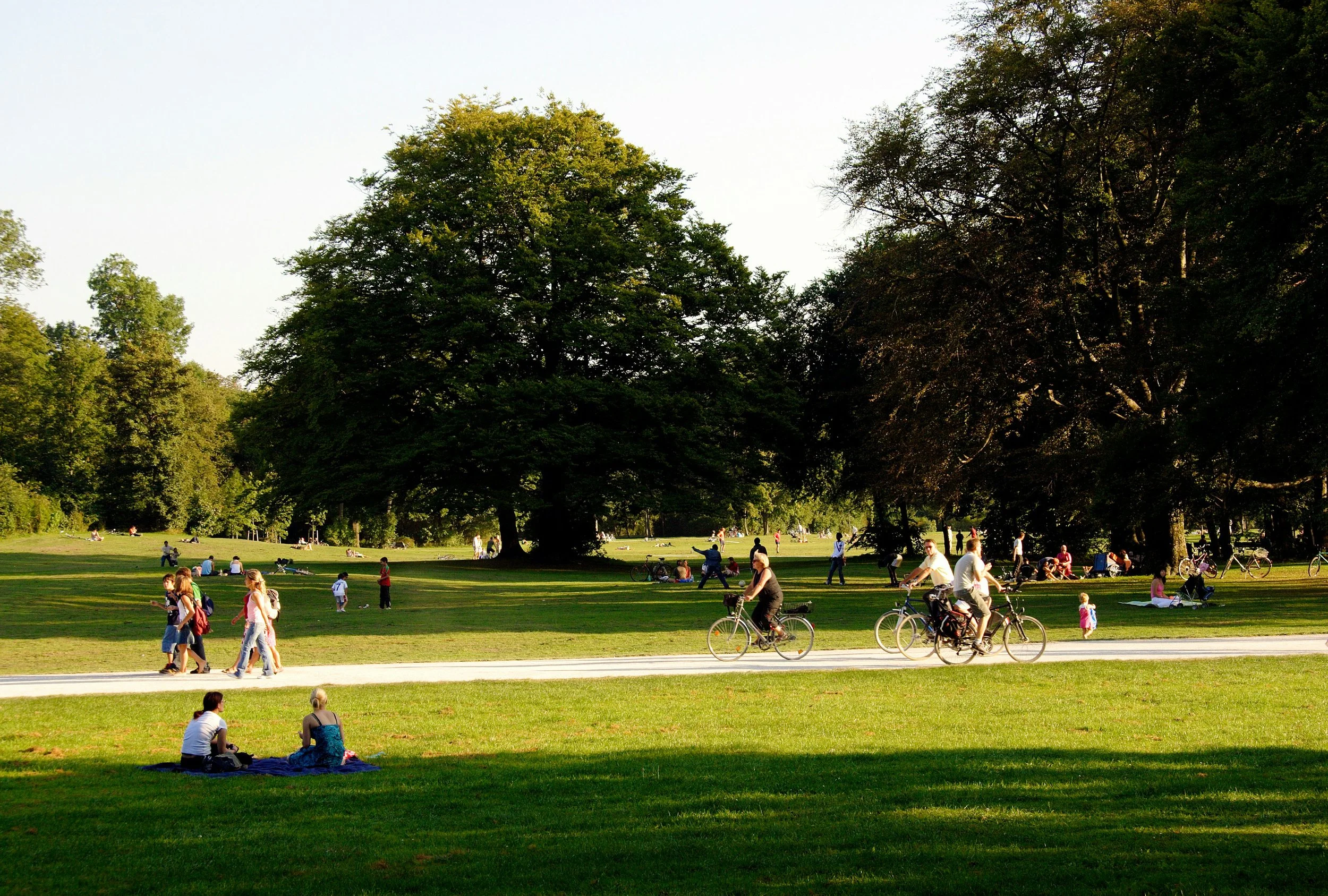
Our Quality of Life is Key
Every resident of Wilsonville deserves to feel welcome, respected, and heard. Our entire community should feel included in conversation by our City government. However, I don’t think it’s the City’s job to make us all happy. Instead, we need to ensure that City Hall stays focused on the responsibilities that only city government can fulfill.
The city’s highest responsibility is providing excellent public services, safe neighborhoods, parks, roads, economic opportunity, and responsible stewardship of taxpayer dollars.
I believe unity is stronger than division. We have far more in common than what separates us, and our city government should reflect that. City government functions best when it focuses on its core responsibilities and serves every resident fairly. Symbolic initiatives should never come at the expense of delivering excellent public services that facilitate quality of life for us all.
“I believe city government should focus on doing a few things exceptionally well:
Create the conditions for businesses and people to thrive.
Create a strong sense of community.
Invest wisely in infrastructure and public safety.
Protect taxpayers through responsible financial stewardship.
Solve problems with creativity, collaboration, and common sense.
When local government does those things well, people, families, businesses, nonprofits, and neighborhoods all have the opportunity to flourish.”
JENNIE HILLLet’s connect!
I’m here to talk and would love to learn about what’s important to you and answer any questions you have for me.